Images credits:Flickr.com
Source| What is being digitzed | Why is it being digitzed |
|---|---|
| Dna is being digitzed. | Dna is being digitized for many reasons. Some including that it could help advance medical history and find cures for fatal diseases. Other reasons is that when dna is digitzed it's held in a data base that can help with many other things like finding suspects for crimes that have been commited. | What are the benefits and harms? | Is this for the better or for worst? |
| There are many benefits and harms what it comes to digitzing dna. Some benfits is that people can find their ancestry, advance research on diseases, suspects for crime,etc. Some harms are that hackers can get to this DNA which can cause them to stop the production of drug developments, expect money for the DNA,etc. Scientist are able to reconstruct people's DNA without having their tissue, could be used to mask a gentic conditon, etc. | When you look at the postives and negatives of digitzing DNA you see that the cons out way the pros. This is because there is a lot more risks when it comes to this. A reason because that hackers can easily hack into the databases and threaten to leak senstive information online. In the text it states "one Indiana hospital paid $55,000 to hackers for this very reason." It is also really easy to change the DNA sequences of someone which makes this more dangerous. In ther text it also states "minimal encryption or other cybersecurity safeguards are used to secure genomic data at these touch points in the information life cycle." This just shows that our DNA isn't fully safe and that digitzing DNA is for thre worst because due to the minimal encryption anything/anyone can get to our DNA. |
Images credits:Flickr.com
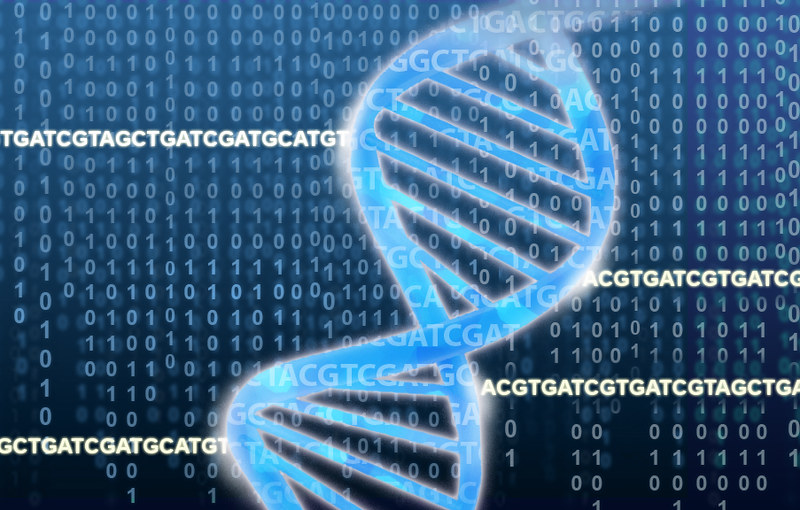
SourceDirect-to-consumer DNA testing services have experienced a surge in popularity over the past few years. Digitizing DNA carries the benefits of uncovering ancestry information and can have significant positive impact on science and medical research. It can, for instance, assist in finding a cure for a fatal disease.+ :) (note:This allows people to know more about where they come from and get jutsice for crimes)
According to Peccoud Lab, which specializes in synthetic biology informatics at Colorado State University, Cyberbiosecurity is a specialty that deals with understanding and mitigating new biological security risks emerging at the interface between biosecurity and cybersecurity+ :). The digitization of DNA involves its storage in a database.(note:People's DNA is stored so does that mean that their DNA is there forever?) solving of a criminal cold case through matching a consumer DNA database with a police database is another example of how digitized DNA can be used+.
The addition of digitized DNA provides hackers with another target to exploit and opens up a new and challenging frontier for cybersecurity professionals-. There are significant implications involved in digitizing DNA.
"The cyber-physical nature of biotechnology raises unprecedented security concerns," coauthors Jean Peccoud, Jenna E. Gallegos, Randall Murch, Wallace G. Buchholz, and Sanjay Raman explain in their research paper titled, Cyberbiosecurity: From Naive Trust to Risk Awareness. "Computers can be compromised by encoding malware in DNA sequences, and biological threats can be synthesized using publicly available data."
Potential security risks include:
Peccoud and Gallegos write that, "With the help of computers, editing and writing DNA sequences are almost as easy as manipulating text documents. And it can be done with malicious intent."- Rashmi Knowles, EMEA Field CTO at RSA Security has commented that, “many people don’t think about this when applying for such services. No matter how secure the organization, no one is completely risk-free, and if breached, genetic data could be sold on hackers without your consent, or the characteristic data it contains could be used to hijack your online accounts.”
Risky across the board Then too, there is forensic use of genetic databases, such as the FBI's DNA Index System (CODIS) and the public genealogy database GEDmatch, both of which were described by Science Magazine as “nothing less than “haphazard and underregulated.”
Researchers at the Center for the Study of Weapons of Mass Destruction at the National Defense University point out that both researchers and bio-industrial companies store and use genomic data on computers, local area networks and/or cloud services and transfer the data between users over email or other sharing technologies. Hence, it is “exposed at many touch points throughout their use to the risks and vulnerabilities common to cyberspace such as hacking, data theft, sabotage, and unauthorized access. In most cases, only- minimal encryption or other cybersecurity safeguards are used to secure genomic data at these touch points in the information life cycle.”- (note:The DNA isn't being kept that safe)
The researchers go on to warn that these risks are exacerbated by an overall lack of awareness among scientists and researchers, in addition to the need for effective measures for protecting genomic data in the first place. They also argue that the securing of genomic data should not be viewed merely as a subset of cybersecurity, because safeguarding of genomic data necessitates an understanding of how bio-scientists use and could potentially misuse such information.