Digital Dilema

CASE STUDY: The Ethical Challenges of CGI Actors in Films

What's Being Digitilized? Why?
Actors who have recently passed away are being taken and then recreated by fim makers into an advanced CGI model of themselves without any consent or permission. The goal was to have a way for actors that have passed away to continue playing their role of a character without having to hire a new actor for that role, or to not start over in any films where an actor dies halfway through the production of a movie. This is an easy way to save time and not ruin the emersion of certain characters who's actors may have had passed away previously.
Benefits and Harms For Better or Worse?
The filmmakers are the ones who are benefiting from this situation, because now they don’t have to hire new actors and all they need to do is hire a CGI team instead to make a CGI replica of the dead actor without needing any sort of consent from the actor or the family of the deceased actor's permission. Because of this, the actors who have passed away are being used for money without their permission or knowledge. The families as well have to now see their dead family member on the screen, knowing that the filmmakers did not reach out to give them permission to use their family member for profit. This is all intended as the filmmakers made the conscious decision to keep using the dead actors for their profit when they had hired CGI specialists to make replicas of dead actors. This decision to make replicas of actors using CGI is harming people more than it benifits anyone. Now that AI has advanced to a level were realistic replicas of actors can just be made using CGI, there's a chance that soon big companies will just have CGI replicas of actors be used in their movies instead of actually hiring the actors. This decision could make actors go out of business and lose their jobs, especially since companies don't usually take consent from these actors. In the article "CASE STUDY: The Ethical Challenges of CGI Actors in Films", it states "Additionally, the possibility is increased that CGI can be used to bring unwilling figures into a film. Many films have employed look-alikes to bring presidents or historical figures into a narrative; the possibility of using CGI to bring in exact versions of actors and celebrities into films does not seem that different from this tactic". This peace of evidence supports the idea that companies have already started to implant these actions of forcing unwilling people into their movies for a more "realistic" turn. This proves that it wouldn't be long until these companies decide to stop hiring actors all together and just use CGI to add the people they want in their movies, without any consent.

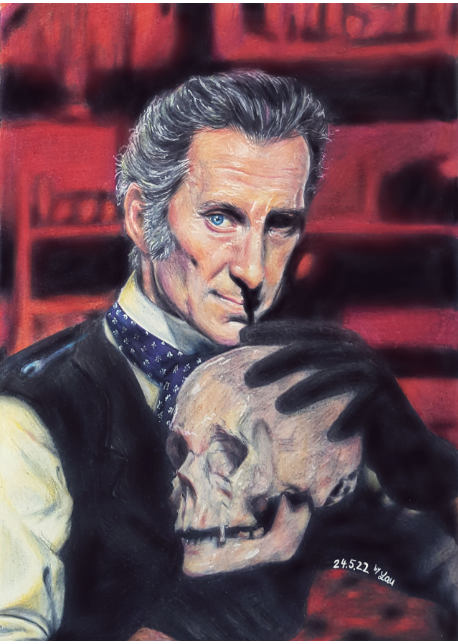
An image of Peter Cushing

Black-Rupoor| Credit: Black-Rupoor on DeviantArt

Source

CASE STUDY: The Ethical Challenges of CGI Actors in Films (Article)

Long-dead actors continue to achieve a sort of immortality in their films. A new controversy over dead actors is coming to life based upon new uses of visual effects and computer-generated imagery (CGI). Instead of simply using CGI to create stunning action sequences, gorgeous backdrops, and imaginary monsters, film makers have started to use its technological wonders to bring back actors from the grave.+ :) (Note:Dead actors got digitalized. This change was intended by filmmakers as they have history of using CGI to make actors look younger.) What ethical problems circle around the use of digital reincarnations in film making?+

The use of CGI to change the look of actors is nothing new. For instance, many films have used such CGI methods to digitally de-age actors with striking results (like those found in the Marvel films)+ , :) or to create spectacular creatures without much physical reality (such as “Gollum” in The Lord of the Rings series). What happens when CGI places an actor into a film through the intervention of technology? A recent example of digital reincarnation in the film industry is found in Fast and Furious 7, where Paul Walker had to be digitally recreated due to his untimely death in the middle of the film’s production. Walker’s brothers had to step in to give a physical form for the visual effect artists to finish off Walker’s character in the movie, + :) (Note:Industries purposely remade Paul Walkers into CGI by using his brothers as a way to make the base.) and the results brought about mixed reviews as some viewers thought it was “odd” that they were seeing a deceased actor on screen that was recreated digitally. :) - However, many argue that this was the best course of action to take in order to complete film production and honor Paul Walker’s work and character.+

Other recent films have continued to bet on using CGI to help recreate characters on the silver screen. For instance, 2016’s Rogue One: A Star War Story used advanced CGI techniques that hint at the ethical problems that lie ahead for film-makers. Peter Cushing was first featured in 1977’s Star Wars: A New Hope as Grand Moff Tarkin. In the Star Wars timeline, the events that take place in Rogue One lead directly into A New Hope, so the story writers behind the re cent Rogue One felt inclined to include Grand Moff Tarkin as a key character in the events leading up to the next film. There was one problem, however: Peter Cushing died in 1994. The film producers were faced with an interesting problem and ultimately decided to use CGI to digitally resurrect Cushing from the grave to reprise his role as the Imperial officer. (Note:The purpose of this was so they didn't have to hire a new actor for the character. This also benefits them as they don't need to waste any more money.) + The result of this addition of Grand Moff Tarkin in the final cut of the film sent shockwaves across the Star Wars fandom, :) with some presenting arguments in defense of adding Cushing’s character into the film by claiming that “actors don’t own characters” - (Tylt.com) and that the fact that the character looked the same over the course of the fictional timeline enhanced the aesthetic effects of the movies. (Note:This impacted the fandom and made them split up into two groups; people that believe this change was ok, and people that are against this.) + :) Others, like Catherine Shoard, were more critical. She condemned the film’s risky choice saying, “though Cushing’s estate approved his use in Rogue One, I’m not convinced that if I had built up a formidable acting career, I’d then want to turn in a performance I had bupkis to do with.”- Rich Haridy of New Atlas also expressed some criticism over the use of Peter Cushing in the recent Star Wars film by writing, “there is something inherently unnerving about watching such a perfect simulacrum of someone you know cannot exist.”-

This use of CGI to bring back dead actors and place them into film raises troubling questions about consent. (Note:Some people believe this harms the dead actors who did not consent to this.) - Assuming that actors should only appear in films that they choose to, how can we be assured that such post-mortem uses are consistent with the actor’s wishes?- :) Is gaining permission from the relatives of the deceased enough to use an actor’s image or likeness? Additionally, the possibility is increased that CGI can be used to bring unwilling figures into a film.- Many films have employed look-alikes to bring presidents or historical figures into a narrative; the possibility of using CGI to bring in exact versions of actors and celebrities into films does not seem that different from this tactic. This filmic use of CGI actors also extends our worries over “deepfakes” (AI-created fake videos) and falsified videos into the murkier realm of fictional products and narratives.- :) While we like continuity in actors as a way to preserve our illusion of reality in films, what ethical pitfalls await us as we CGI the undead—or the unwilling—into our films or artworks?